Some forgetfulness is normal
As we grow older, the brain changes just like the rest of the body. It may take a little longer to learn something new or to recall a name, and we may misplace spectacles more often. These changes are usually mild, do not get much worse year to year and do not stop a person from living independently.
Dementia is different. It is not a normal part of ageing. It is caused by diseases that damage brain cells — Alzheimer’s disease, vascular disease (strokes, including “silent” small ones), Lewy body disease and frontotemporal degeneration are the most common. The changes are progressive and begin to interfere with daily life.
Normal ageing vs. possible dementia
- Ageing: occasionally forgetting a name and remembering it later. Dementia: forgetting recent conversations or events entirely and asking the same question repeatedly.
- Ageing: sometimes misplacing things. Dementia: putting things in unusual places (keys in the fridge) and being unable to retrace steps, sometimes accusing others of stealing.
- Ageing: making an occasional poor decision. Dementia: frequent poor judgement, such as falling for financial scams or dressing inappropriately for the weather.
- Ageing: needing help with new gadgets. Dementia: difficulty with familiar tasks such as cooking a regular dish, managing money or taking medicines correctly.
- Ageing: feeling weary of social obligations at times. Dementia: withdrawing from hobbies and family, with noticeable changes in mood or personality.
- Ageing: occasionally searching for the right word. Dementia: frequent difficulty following or joining a conversation.
Not every memory problem is dementia
Depression in older adults can look like memory loss. Thyroid problems, vitamin B12 deficiency, poor hearing or vision, sleep problems, alcohol and side-effects of medicines can all affect memory and concentration. Sudden confusion over hours or days — often due to infection, dehydration or a new medicine — is called delirium and needs prompt medical attention.
This is why a proper medical and psychiatric assessment is important. Some causes are fully treatable.
When should a family seek help?
Consult a doctor if memory or behaviour changes are noticeable to the family, are getting worse over months, or are affecting safety — for example, leaving the gas on, getting lost or missing medicines. An early diagnosis allows treatment of reversible causes, access to medicines that may help symptoms, and time to plan.
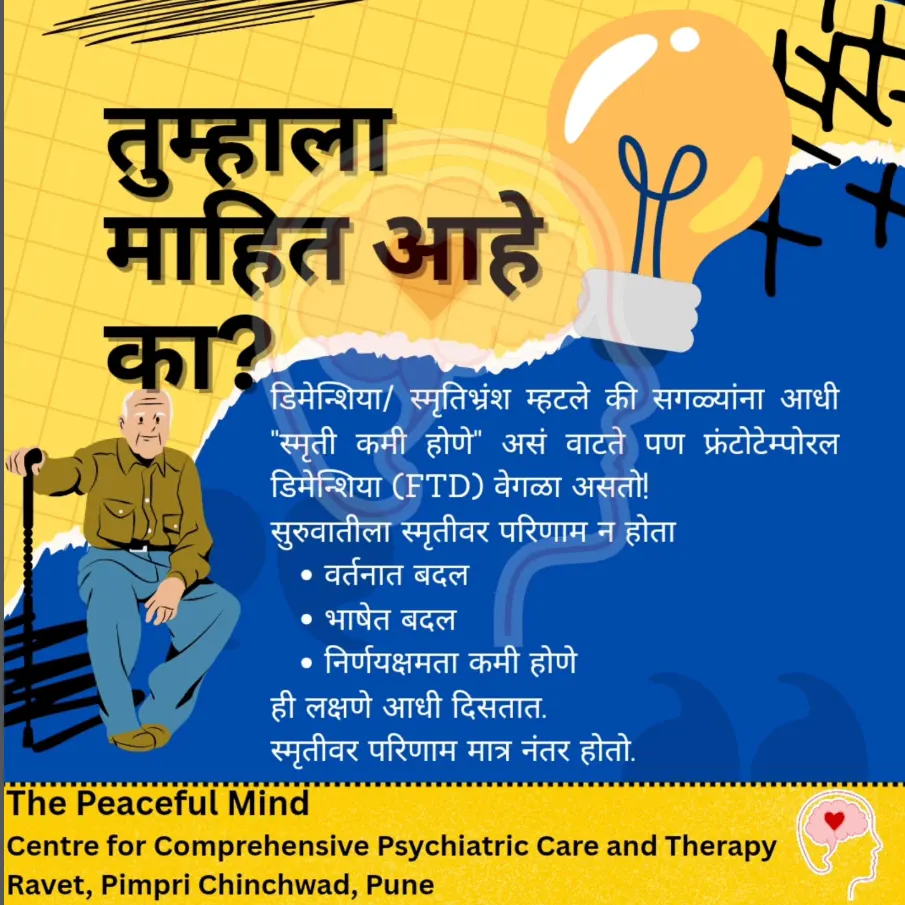
वय वाढणे आणि स्मृतिभ्रंश यातील फरक
वयानुसार कधीतरी नाव आठवायला वेळ लागणे किंवा चष्मा कुठे ठेवला ते विसरणे हे सामान्य आहे. पण अलीकडच्या घटना पूर्णपणे विसरणे, तेच प्रश्न पुन्हा पुन्हा विचारणे, रोजची ओळखीची कामे (स्वयंपाक, पैशांचा हिशोब, औषधे घेणे) जमेनाशी होणे, ओळखीच्या ठिकाणी हरवणे किंवा स्वभावात मोठा बदल होणे ही स्मृतिभ्रंशाची लक्षणे असू शकतात.
नैराश्य, थायरॉईड, व्हिटॅमिन B12 ची कमतरता किंवा औषधांचे दुष्परिणाम यामुळेही विसरभोळेपणा येऊ शकतो — आणि हे बरे होऊ शकते. म्हणून कुटुंबीयांना बदल जाणवल्यास लवकर तपासणी करून घ्या.
Key takeaways
- Mild, stable forgetfulness is common with age; dementia affects daily functioning and progresses.
- Depression, thyroid problems, vitamin deficiency and medicines can mimic dementia and are treatable.
- Sudden confusion is a medical emergency (delirium).
- Early assessment helps families plan and get support.